Quick answer: use SAFE Start
- Schedule: ask for a short window first.
- Align: lead with a shared goal.
- Frame: name one recent moment and its impact.
- Explore: ask for your partner's view early.
- End: agree on one testable next step this week.
Timing first: a decent script in a calm window usually lands better than a perfect script during stress, multitasking, or late-night exhaustion.
You do not need a perfect script. A calm window, one concrete moment, and one small next step usually matter more.
Messy reality: even a careful opener can still go badly when stress is high or old hurt is unresolved. That does not mean the conversation is impossible.
Safety note: this guide is for everyday relationship conversations, not urgent safety or abuse situations.
Why sensitive topics escalate quickly
Common trigger: most people react to perceived threat before they react to content. Surprise timing, stacked complaints, and character labels can all sound like attack.
Practical takeaway: if your opener sounds like prosecution, your partner defends before they understand. If it sounds collaborative, they stay in problem-solving mode longer.
The SAFE Start framework explained
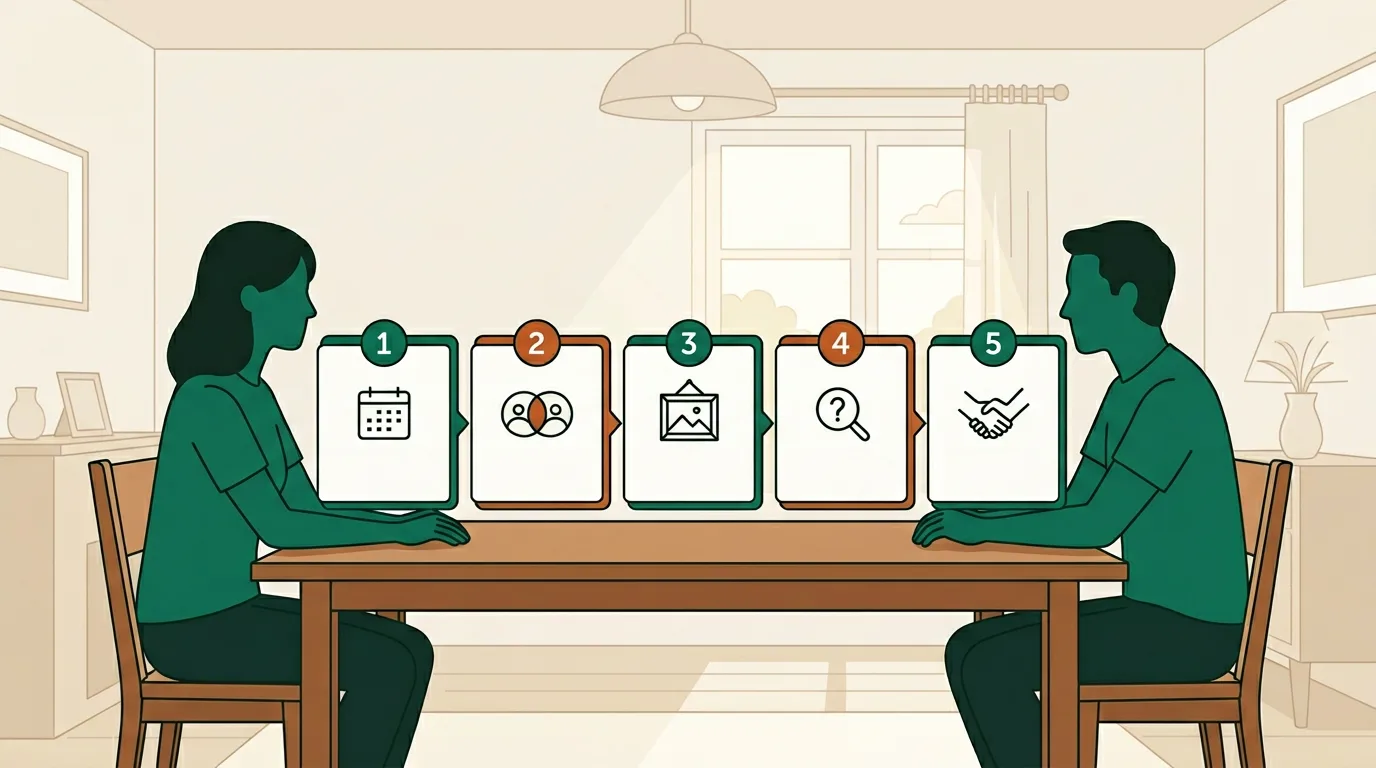
SAFE Start stands for Schedule, Align, Frame, Explore, End. Use it when the topic is emotionally loaded or easy to avoid.
- Schedule: Ask for a short time window first. Example: "Can we do 10 minutes tonight on something important to me?"
- Align: Lead with shared intent. Example: "I want us to feel closer around this, not start a fight."
- Frame: Name one concrete moment and impact. Skip labels like always, never, or selfish.
- Explore: Ask for their side early: "How did that moment look from your perspective?"
- End: Agree on one practical change plus a follow-up time this week.
Copyable script 1: money tension after a surprise purchase
Copyable script 2: feeling distant and less connected
Want help turning your exact situation into a calmer opener?
Wehaven lets you reflect privately first, approve what gets shared, and start with clearer wording instead of a raw first draft.
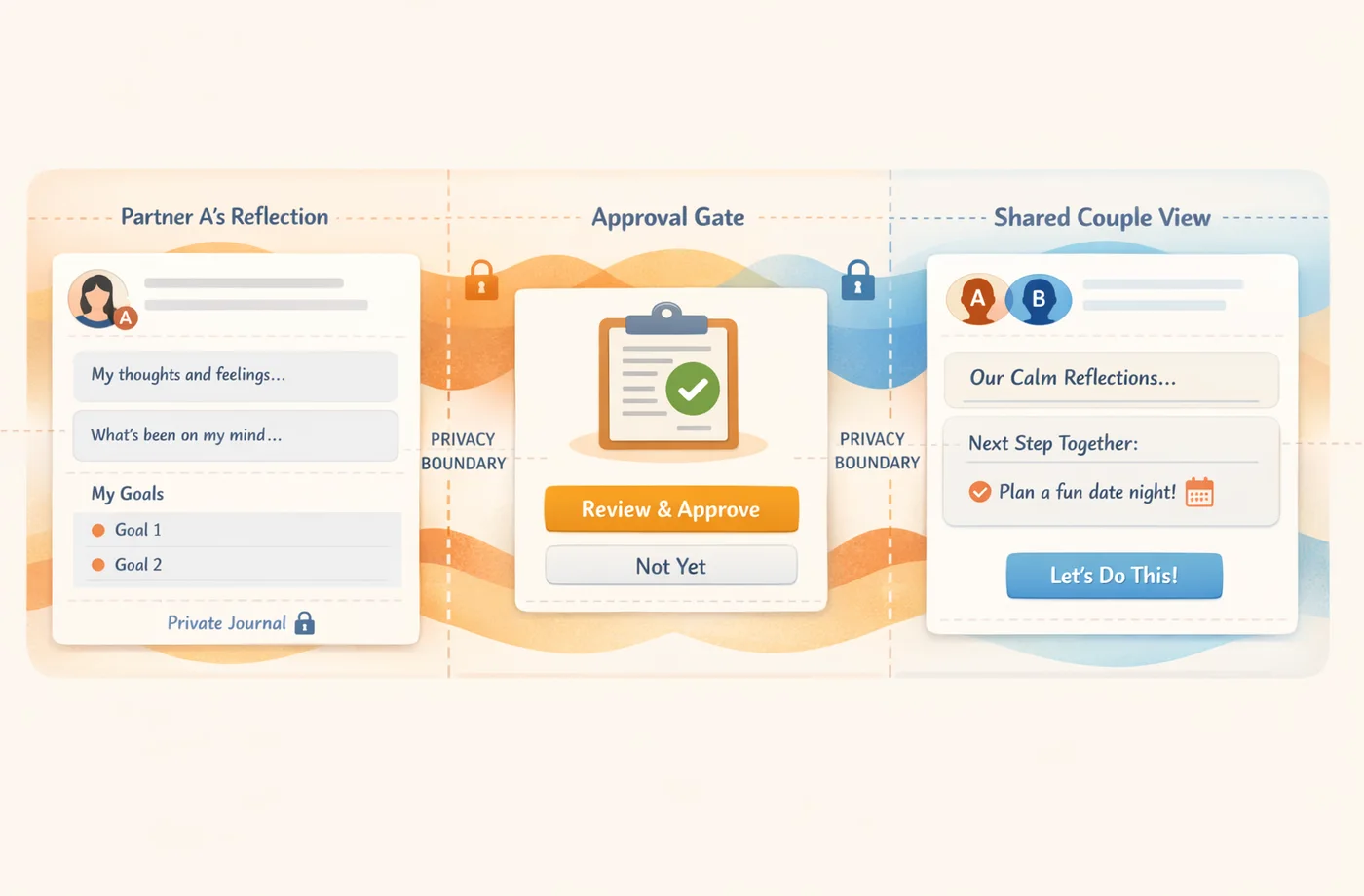
1. Private reflection
Write the raw version where only you can see it first.
2. Approve what gets shared
Edit a calmer draft before anything is sent to your partner.
3. Share one focused next step
Send a concise opener with one practical action to try.
Mistakes that make sensitive topics feel like an ambush
- Opening without consent when your partner is clearly overloaded.
- Combining three old grievances into one speech.
- Using labels and absolutes instead of one recent moment.
- Skipping your partner perspective question until the end.
- Ending with vague hope instead of one testable action.
If the first attempt still goes badly
Recovery matters more than forcing completion. Pause early, narrow to one issue, and try a short reset line before deciding whether to continue.
- "I'm not trying to attack you. I want us to solve one thing together."
- "Can we pause two minutes and restart with one issue only?"
- "Would a later 10-minute window be better so we do this well?"
- For a post-argument sequence, use the conflict repair script for couples.
FAQ: bringing up sensitive topics with your partner
What if my partner says now is not a good time?
Do not force it. Ask for a specific alternate window: "Okay, what time tonight works for 10 minutes?" A scheduled yes is better than a pressured yes.
Is texting a sensitive topic okay?
Text is best for opening and scheduling. For nuance, accountability, and repair, a short live conversation usually works better.
What if we escalate anyway even with a calm opener?
Use one reset line, pause early, and return to one issue only. If you want a calmer initial structure first, review how to talk to your partner without starting a fight.
How long should this kind of talk be?
Keep the first round short: 10 to 15 minutes. End with one action and one follow-up time. For recurring maintenance, use weekly relationship check-in questions.
What counts as one topic?
Focus on one moment, one pattern, or one request. Do not try to solve the whole relationship in one conversation.