Quick answer: use the REPAIR apology
- Recognize the exact action you did.
- Empathize with the impact before explaining intent.
- Apologize clearly without if, but, or counter-blame.
- Plan one concrete behavior change.
- Invite what your partner needs now.
- Recheck in 24 to 48 hours.
Opinionated take: most apologies fail because people defend their intent too early. When you explain before acknowledging impact, your partner hears self-protection, not accountability.
Messy reality note: even a strong apology can still land badly if your partner is exhausted or flooded. A good script improves your odds, but timing and stress still matter.
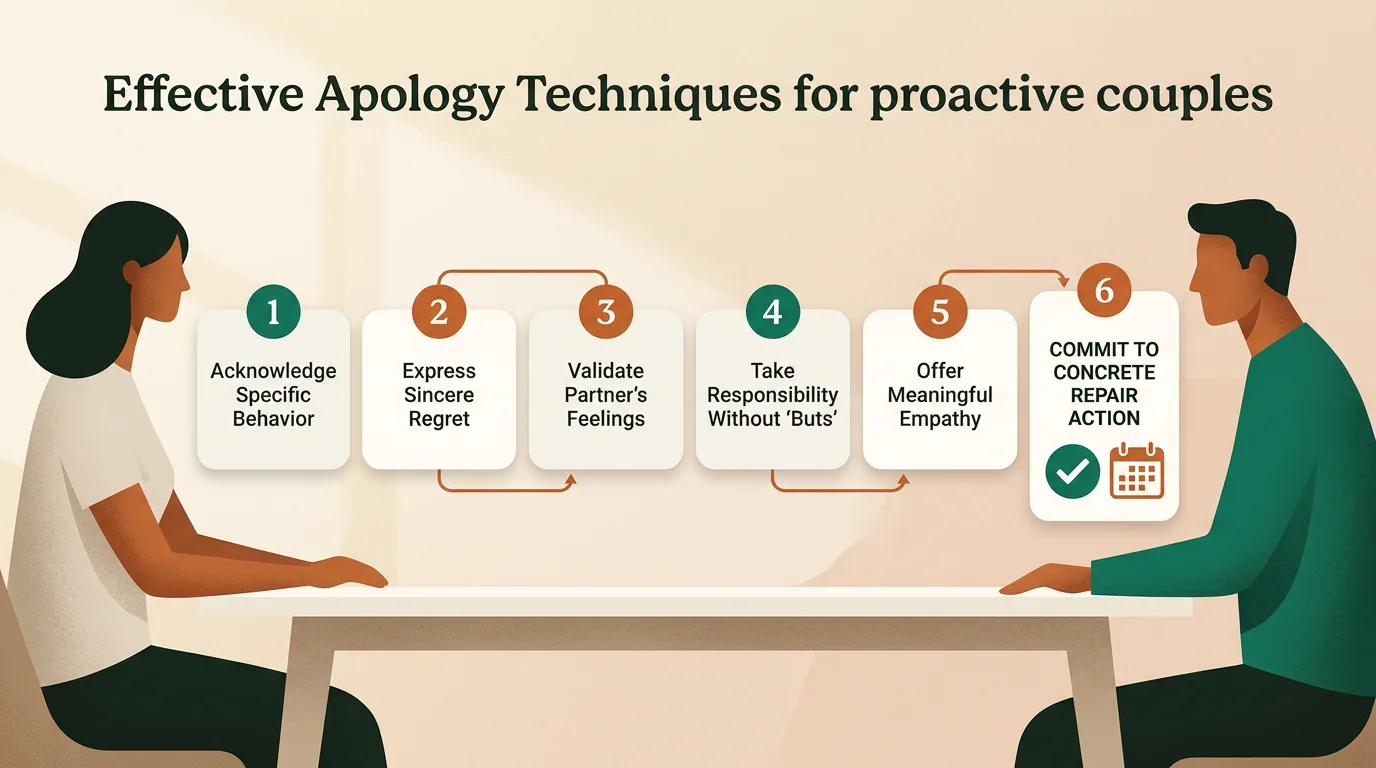
Use the six-step map as a quick reminder before you talk: accountability first, explanation later, then one concrete repair action your partner can actually verify.
The REPAIR framework explained
REPAIR stands for Recognize, Empathize, Apologize, Plan, Invite, Recheck. It keeps apologies focused on accountability and future safety instead of argument replay.
- Recognize: Name the exact behavior. Concrete language lowers ambiguity and shows you are not dodging.
- Empathize: Acknowledge impact before intent. Your partner needs to feel understood before they can evaluate your explanation.
- Apologize: Say sorry directly for what you did. Skip language that weakens ownership.
- Plan: Offer one change your partner can observe this week. Repair is behavior, not just words.
- Invite: Ask what they need to feel safer. Then listen without defending.
- Recheck: Follow up in one to two days so the apology does not disappear after the moment.
Copyable apology example 1: late cancellation with no update
"I am sorry I canceled dinner at the last minute and did not update you sooner. I can see that landed as disrespectful and unreliable. Next time, I will message as soon as plans change, even if I do not have all details yet. What would help rebuild trust around this week?"
Copyable apology example 2: harsh tone during conflict
"I am sorry for how I spoke to you last night. My tone was sharp and it made the conversation feel unsafe. I should have paused instead of pushing. Tonight, if I feel activated, I will take a five-minute reset before continuing. Is there one thing you want me to do differently if this comes up again?"
Apology-killers that usually make things worse
- "I am sorry if you felt hurt." This questions their experience.
- "I am sorry, but you also..." This turns apology into counterattack.
- "That is not what I meant." Intent can matter later, but not first.
- "Can we move on now?" This rushes repair before trust is rebuilt.
If your first apology attempt escalates anyway
Use one reset line and narrow the scope: "I hear that this still feels bad. I want to repair this one moment first, not debate everything at once."
- Pause 10 to 20 minutes if tone keeps rising.
- Restart with one behavior, one impact, one repair action.
- If text is spiraling, move to a short live conversation window.
- If you need a post-argument repair sequence, use the conflict repair script for couples.
Text apology vs live apology: quick chooser
- Use text for a short accountability opener or to set a time to talk.
- Use live conversation for bigger hurt, tone repair, or trust rebuilding.
- If you start by text, keep it to four lines and move live for nuance. You can rewrite first with this gentle message guide.
60-second apology check before you send or say it
- Did you name your behavior in plain, specific words?
- Did you acknowledge their likely impact before explaining intent?
- Did you remove if, but, and any counter-blame line?
- Did you offer one concrete repair step with timing?
- Did you ask what they need next instead of forcing quick closure?
FAQ: apologizing without making it worse
What if my partner says my apology is too late? Acknowledge that directly instead of debating timing: "You are right that I should have owned this sooner." Then offer one concrete repair action now.
Should I apologize by text or in person? Text is useful for a short opener. For deeper hurt, live conversation usually repairs trust better.
What if I apologize and my partner gets angrier? Name escalation early, pause, and restart with one issue only. If you need help opening tough talks before repair, use this guide on how to talk to your partner without starting a fight.
For another high-friction scenario, see how to bring up a sensitive topic with your partner.
If the issue is recurring, run a short weekly maintenance rhythm with weekly relationship check-in questions so repair is not only happening after blowups.